Why I Love Homemade Bone Broth
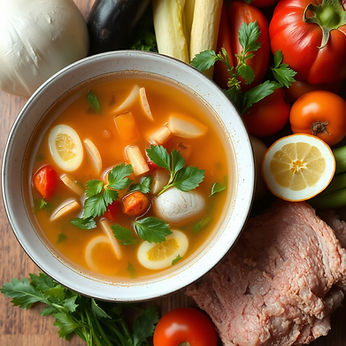
🥣 The Nourishing Power of Homemade Grass‑Fed Bone Broth
Why It’s Worth Making — and How to Do It Right
There’s something magical about a pot of bone broth simmering away on the stove. It’s slow, grounding, and deeply comforting — the kind of kitchen ritual that makes your whole home feel warm. But beyond the cozy vibes, grass‑fed bone broth is one of the most nutrient‑dense, restorative foods you can make at home.
If you’ve ever wondered why people rave about it, or what makes grass‑fed bones so special, you’re in the right place. Let’s walk through the benefits in a simple, practical way — and then I’ll share my go‑to recipe so you can make your own batch with confidence.
RULE OF THUMB: IF IT'S NOT THICK AND GELATNOUS, IT'S NOT BONE BROTH. DON'T WASTE YOUR HARD EARNED MONEY ON STORE BOUGHT KNOCK OFFS, WE CAN DO THIS OURSELVES.
🌿 Health Benefits of Grass‑Fed Bone Broth
Keywords: grass‑fed bone broth benefits, collagen-rich broth, gut health, anti-inflammatory foods, homemade bone broth
✨ Supports Gut Health & Digestion
Grass‑fed bone broth is naturally rich in gelatin, glycine, and glutamine — amino acids that help support the gut lining. Many people find it soothing, especially if they deal with bloating or digestive sensitivity. It’s gentle, warm, and easy on the stomach.
✨ Naturally Anti‑Inflammatory
Grass‑fed bones contain higher levels of omega‑3 fatty acids and CLA, both known for their anti‑inflammatory properties. This makes grass‑fed broth a nourishing option for anyone looking to support overall wellness and reduce inflammatory stress in the body.
✨ Nourishes Skin, Hair & Nails
Collagen is the star here. Slow‑simmered broth delivers the building blocks your body uses to support skin elasticity and hydration. It’s not a magic potion, but it’s a beautiful, food‑based way to nourish your glow from the inside out.
✨ Supports Joint Health
The long simmering process pulls minerals and collagen from the bones, creating a broth that supports joint comfort and mobility. Whether you’re active, aging, or just want to feel a little more fluid in your movement, this is a gentle ally.
✨ Hydrating & Comforting
Bone broth is naturally hydrating and full of electrolytes. It’s a lovely morning drink, a mid‑day pick‑me‑up, or a soothing evening wind‑down. Think of it as nourishment that feels like a hug.
✨ Cleaner, Lower‑Toxin Nutrition
Because grass‑fed animals are raised on pasture, their bones tend to contain fewer contaminants. Since broth extracts everything from the bones — the good and the not‑so‑good — starting with clean, grass‑fed bones gives you a purer, more nutrient‑dense final product.
🍲 Homemade Grass‑Fed Bone Broth Recipe
This recipe is simple, deeply nourishing, and designed to extract maximum minerals, collagen, and flavor.
🧾 Ingredients
3–5 lbs grass‑fed beef bones (mix of knuckle, marrow, and oxtail for best gelatin)
1/2 cup raw apple cider vinegar (crucial for mineral extraction)
2 large onions, roughly chopped (peels on is fine)
3–4 carrots, chopped
3–4 celery stalks, chopped
1 head garlic, halved or smashed
Fresh ginger, about a 2‑inch piece
Fresh turmeric, about a 2‑inch piece
2–3 bay leaves
1 tbsp whole peppercorns
Optional: fresh thyme, parsley, or 1–2 tbsp tomato paste for deeper flavor
Filtered water (enough to fully cover the bones)
Sea salt, to taste
🥘 Instructions
1. Roast the Bones
Preheat oven to 400°F–450°F (200°C–230°C).Place bones in a single layer on a roasting pan and roast for 30–45 minutes, until browned and sizzling.
2. Prep the Pot
Transfer roasted bones to a large stockpot or slow cooker.
Pour 1/2 cup of water into the roasting pan, scrape up the browned bits (fond), and pour this mixture into the pot.
3. Add Water and Vinegar
Cover the bones with filtered water (1–2 inches above the bones).Add the apple cider vinegar and let it sit for 30–60 minutes to help draw out minerals.
4. Add Vegetables and Herbs
Add onions, carrots, celery, garlic, ginger, turmeric, bay leaves, and peppercorns.
5. Simmer Low and Slow
Bring to a gentle boil, then immediately reduce to the lowest setting. Cover and simmer for 24–48 hours.
Slow cooker tip: Set to low for 18–24 hours.
6. Strain the Broth
Remove from heat. Strain through a fine‑mesh sieve or cheesecloth into a large heatproof bowl or pot. Discard solids.
7. Cool and Remove Fat
Let cool to room temperature, then refrigerate overnight. A thick fat cap will form — scrape it off and discard (or save for cooking).
8. Store
Store in sealed glass jars in the refrigerator for 5–7 days or freeze for up to 6 months.
🧊 Storage Tips
Freeze in silicone molds or ice cube trays for easy portioning
Leave 1 inch of headspace in jars to prevent cracking
Label with date and type of bones used
🍽️ How to Use Your Bone Broth
Sip warm with sea salt
Use as a base for soups, stews, or ramen
Cook rice, quinoa, or lentils in it
Add to sautéed veggies
Blend into sauces or gravies
🔄 Variations
Chicken bone broth: Use pasture‑raised chicken bones; simmer 12–18 hours
Roasted garlic broth: Add a whole head of roasted garlic
Herbal broth: Add rosemary, sage, or lemongrass
Gut‑friendly version: Skip onions and garlic if sensitive
🌟 Final Thoughts: A Simple Ritual With Big Benefits
Homemade grass‑fed bone broth is one of those timeless foods that gives back more than it takes. A handful of ingredients, a long slow simmer, and you end up with a nourishing base you can sip, freeze, or use in countless recipes.
Whether you’re making it for gut support, skin health, joint comfort, or simply because it tastes amazing, your body will feel the difference.


Comments